
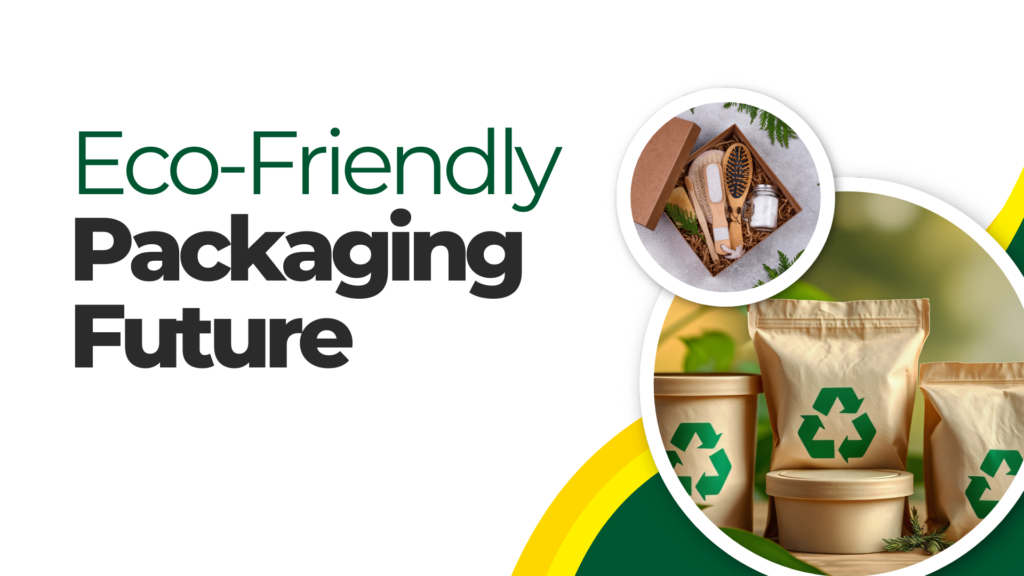
Eco-Friendly Packaging Is the Future of the food industry: The food industry is shifting rapidly due to plastic waste regulation and strong consumer demand for eco-friendly packaging. Secure your business with high-performance sustainable disposable packaging like paper cup and bagasse packaging with KB Overseas.
People talk a lot about packaging these days. Too much, honestly. Everyone has an opinion, everyone has a prediction, and everyone suddenly sounds like an environmental expert.
But if you actually run or manage a busy food business, the operational reality looks very different from the theoretical debates.
Packaging is no longer something you decide once and forget about for five years. It shows up critically in customer reviews, it is scrutinized heavily in compliance checks, and it causes major disruption when materials you rely on get banned overnight. And that is precisely where Eco-Friendly Packaging Is the Future stops being an abstract concept and becomes an urgent, very real, and very fast business imperative.
This fundamental industry shift didn’t happen because it sounded nice in a marketing meeting. It happened because conventional plastic stopped being operationally convenient, legally compliant, and socially acceptable. This movement towards the understanding that Eco-Friendly Packaging Is the Future is irreversible. To stay ahead of the curve, businesses must look to reliable partners like K.B. Overseas, a leading manufacturer committed to sustainable disposable packaging. We invite you to explore the capabilities and products by visiting the home.
The Irresistible Forces Defining the Eco-Friendly Packaging Is the Future
The accelerating global adoption of sustainable disposable packaging is being propelled by two powerful forces: increasingly stringent legal frameworks designed to combat pollution, and dramatic, lasting shifts in consumer purchasing behavior. Ignoring either of these forces puts any modern food business at severe operational and reputational risk, proving that Eco-Friendly Packaging Is the Future of stable operations.
Plastic Waste Regulation: The Non-Negotiable Reality
Let us start with the rules and global plastic waste regulation. Across all major global markets, plastic waste regulation has stopped being theoretical—it is happening in real time and is becoming progressively stricter. Entire product categories, such as single-use cutlery, plates, and certain foam containers, are being restricted or outright phased out, often with surprisingly little warning.
In the European Union, comprehensive single-use plastic bans are already old news, with further restrictions rolling out constantly. In the USA, regulations are a complex patchwork, varying significantly by state and even city, which makes compliance navigating for national brands even more complicated. Key markets like Canada, Australia, and the UAE are all moving swiftly in the same, definitive direction. This global alignment on plastic waste regulation matters profoundly because food businesses do not operate in isolated, unregulated bubbles.
If your established packaging supply suddenly becomes non-compliant due to a new wave of plastic waste regulation, you face far more than just losing stock. You lose valuable time sourcing new materials, you destroy brand consistency, and you can rapidly lose customers. Switching to reliable sustainable disposable packaging is no longer merely about being “green enough.” It is primarily a critical, defensive business strategy designed to ensure operational stability and prevent the expensive crises caused by regulatory non-compliance. That is why the belief that Eco-Friendly Packaging Is the Future is paramount; it is essential risk management, and any successful strategy must acknowledge the weight of plastic waste regulation.
Consumer Demand for Eco-Friendly Packaging: The Expectation, Not the Trend
There is a lot of noise surrounding consumer sentiment—endless surveys, reports, and predictions. But on the ground, where purchases are actually made, the signal is stunningly simple and overwhelmingly clear: consumer demand for eco-friendly packaging is a powerful, mainstream expectation, not a fleeting trend.
The modern customer may not spend time reading complex sustainability reports, but they immediately feel it when packaging looks cheap, feels wasteful, or uses obviously outdated, polluting materials. Conversely, they absolutely notice and value when their takeaway food arrives in materials that feel responsible, substantial, and compostable. This positive feeling is the core of the rising consumer demand for eco-friendly packaging.
Statistics reinforce this reality. Reports indicate that an overwhelming 90% of consumers prefer brands that use sustainable disposable packaging, and more than half have intentionally chosen products packaged sustainably in the last six months. Notably, almost 40% of consumers report switching brands entirely because a competitor offered a more environmentally friendly packaging option. This consumer demand for eco-friendly packaging is particularly strong among younger demographics who are willing to pay a premium (often over 40%) for products packaged sustainably.
This shift is often subtle, but its impact is massive. Customers do not always take to social media to praise sustainable disposable packaging, but they certainly remember it. And crucially, they associate the visible use of responsible materials with brands that genuinely care. This consumer demand for eco-friendly packaging has cemented itself as a core component of brand credibility. It is no longer an optional feature to highlight; it is the fundamental baseline requirement for brands recognizing that Eco-Friendly Packaging Is the Future.
The Material Advantage: Bagasse and Paper Leading the Eco-Friendly Packaging Is the Future
The shift to the understanding that Eco-Friendly Packaging Is the Future requires choosing materials that are not just marketable but are truly performant in demanding food service environments. Not all “eco” materials are created equal; some look impressive in presentations but fail miserably during actual, daily use. This is why materials like bagasse and paper have risen to prominence globally.
Bagasse Packaging Benefits: Performance Meets Purpose
Bagasse is fundamentally different from many synthetic alternatives. Made from sugarcane residue—the fibrous pulp left after the juice extraction process—bagasse utilizes a readily available agricultural by-product. This means the material is tree-free, relies on no new synthetic shortcuts, and converts waste into an incredibly useful resource. This sustainable material sourcing inherently strengthens the belief that Eco-Friendly Packaging Is the Future.
The genuine bagasse packaging benefits show up precisely where it matters most: performance in a busy kitchen and delivery chain.
- Superior Heat and Cold Resistance: Bagasse containers handle hot food exceptionally well, resisting warping better than many plant-based plastics. They are typically safe for microwave and freezer use, making them highly versatile.
- Grease Control and Durability: It is naturally more resistant to grease and oil penetration than many standard paperboard alternatives, preventing the dreaded “soggy bottom” or premature container collapse. This ensures the sustainable disposable packaging maintains structural integrity during delivery.
- Compostability: When disposal finally comes into the picture, bagasse achieves what conventional plastic never could. It is designed to break down fully and naturally under industrial composting conditions (often within 90 days), leaving behind nutrient-rich compost instead of enduring environmental problems, thereby reducing landfill volume.
This combination of robust, real-world performance and verifiable compostability is why the bagasse packaging benefits play a central role in the fact that Eco-Friendly Packaging Is the Future.
Paper Cup and Bagasse Packaging: The Synergy of Simplicity
Most food businesses do not need a hundred different, complex packaging solutions. They need a small, reliable set of materials that covers the vast majority of their operational situations flawlessly. This is where the synergy between paper cup and bagasse packaging truly shines, replacing a large portion of the plastic footprint in one strategic move.
- Paper cups reliably handle all types of hot and cold beverages, managing heat, handling requirements, and volume without drama. When responsibly sourced and lined with compostable barriers, they fit perfectly into the sustainable disposable packaging model.
- Bagasse containers manage the main course meals, sides, and heavy takeaway orders with structural integrity, ensuring that the food arrives as intended without collapsing halfway through the delivery route. This pairing provides a complete, cohesive, and responsible packaging suite.
Together, paper cup and bagasse packaging effectively replaces a massive portion of the single-use plastic use in modern food service operations, offering a scalable, elegant, and practical solution that aligns with plastic waste regulation. That simple, reliable practicality is the core reason why these materials reinforce the understanding that Eco-Friendly Packaging Is the Future. We invite you to view their full range of products and solutions by visiting their gallery.
Operational Reliability: The True Test of the Eco-Friendly Packaging Is the Future
Here is something that people often do not talk about enough when discussing why Eco-Friendly Packaging Is the Future: Packaging is fundamentally useless if it does not arrive at your door on time, in the correct volume, and with consistent quality.
You can select the most innovative, sustainable materials in the world, but if your supplier cannot scale production effectively, cannot ship consistently across international borders, or cannot expertly handle complex export requirements, then none of the material science truly matters to your business operation. A single shipment delay or a quality lapse can wipe out weeks of careful planning, proving that Eco-Friendly Packaging Is the Future is not just about materials; it is about robust, predictable supply systems.
Why Supply Chain Consistency Matters
For brands operating internationally, delays or compliance failures can quickly shut down operations, resulting in lost revenue and customer dissatisfaction. A reliable partnership is defined by:
- Reliable Production: Having the capacity to meet seasonal peak demands without sacrificing quality or extending lead times for sustainable disposable packaging.
- Predictable Timelines: An experienced supplier who understands that Eco-Friendly Packaging Is the Future must possess stable, long-term logistics partnerships to ensure consistent shipping and efficient customs clearance.
- Consistent Quality: The material must perform the same way, every time, regardless of whether it is batch one or batch five hundred. This consistency ensures the bagasse packaging benefits are delivered reliably.
Where K.B. Overseas Fits Into the Eco-Friendly Packaging Is the Future
K.B. Overseas operates with this operational reality foremost in mind. As a manufacturer and exporter, the focus is not only on the sustainable materials used, but on how those materials are produced, quality-checked, handled, and delivered to international markets. Working with paper cup and bagasse packaging at scale requires intense discipline, repeatable processes, and stringent quality control systems to ensure consistency even as volumes soar.
Supplying international markets adds a critical layer of complexity: plastic waste regulation and standards differ greatly. Expectations for food-grade quality differ. Timelines are far less forgiving. That is why K.B. Overseas emphasizes reliability and export experience just as much as sustainability. By focusing on scalable, quality-driven production of certified sustainable disposable packaging, we help global businesses navigate the fact that Eco-Friendly Packaging Is the Future with stability and confidence.
The Strategic Advantage of Adopting the Eco-Friendly Packaging Is the Future Now
One unexpected and profound benefit of committing early to responsible materials is the simplicity it introduces to your operational planning. When you align with the reality that Eco-Friendly Packaging Is the Future, you effectively remove an entire category of constant, stressful decision-making from your quarterly planning cycle.
You are not constantly reacting to every new plastic waste regulation announcement. You are not forced to switch materials every year due to public pressure or regulatory bans. You are not repeatedly spending money and time explaining last-minute packaging changes to confused customers.
Instead, you choose proven solutions like high-quality paper cup and bagasse packaging that are already aligned with the direction the entire industry is moving. That stability and operational certainty has immense, measurable business value, allowing you to focus resources on core business growth rather than crisis management.
What Businesses Miss When They Delay
Some businesses wait to fully adopt the fact that Eco-Friendly Packaging Is the Future. Not because they disagree with the philosophy, but because they believe change is too inconvenient or expensive right now.
The brutal reality is that delay often costs far more than action. Late transitions typically involve:
- Higher Material Costs: Rushed, last-minute sourcing means paying premium prices in a competitive market.
- Limited Supplier Options: The best, most reliable suppliers are already partnered with forward-thinking competitors.
- Rushed Decisions: Forced compliance drives poor material choices that may compromise food quality or brand image.
- Operational Stress: The inevitable disruption damages employee morale and customer experience.
By contrast, businesses that move earlier and commit to the idea that Eco-Friendly Packaging Is the Future gain significant competitive control. They have more material options, more flexible timelines, and the marketing advantage of being a leader, not a follower, in meeting consumer demand for eco-friendly packaging. The knowledge that Eco-Friendly Packaging Is the Future rewards preparation and proactive strategy, not reaction.
Conclusion
This shift is not about perfection; it is about choosing the right direction and the right partner.
The reality that Eco-Friendly Packaging Is the Future is already here, and it is reshaping how every food business operates. Materials like bagasse and paper are not experimental anymore. They are proven, practical, high-performance components of sustainable disposable packaging that are widely adopted by market leaders.
The question now is not whether this fundamental change will happen—it already has. The critical question for your business is whether your current packaging strategy is ready to lead the charge that Eco-Friendly Packaging Is the Future or simply react to it.
To start aligning your strategy with a reliable, quality-focused partner in paper cup and bagasse packaging, please contact us and the LinkedIn page here.
Frequently Asked Questions (FAQs)
Q: Why is eco-friendly packaging becoming unavoidable in large-scale food service?
A: It is unavoidable because of the simultaneous pressure from expanding plastic waste regulation (governments are mandating bans) and strong, non-stop consumer demand for eco-friendly packaging (customers are voting with their wallets for sustainable solutions). This confirms the idea that Eco-Friendly Packaging Is the Future.
Q: What are the real bagasse packaging benefits in daily food service use, beyond just being compostable?
A: The main bagasse packaging benefits are practical performance features: superior heat resistance for hot meals, excellent grease control, and high structural strength that prevents containers from collapsing during delivery, all delivered in a sustainable disposable packaging format.
Q: Is paper cup and bagasse packaging suitable for large international catering operations?
A: Yes, absolutely. That is exactly where the materials’ consistency, heat performance, and the supplier’s capacity for scalable, export-ready production of paper cup and bagasse packaging matter most for long-term operational stability and prove that Eco-Friendly Packaging Is the Future of large-scale operations.
Q: Are there cost benefits to switching to sustainable disposable packaging?
A: While the upfront material cost may sometimes be slightly higher than the cheapest virgin plastic, the long-term benefits include avoiding high compliance fines from plastic waste regulation, reducing waste disposal fees, and significantly enhancing brand equity to meet strong consumer demand for eco-friendly packaging.
Q: How can I verify the compostability claims of a supplier’s products?
A: You must demand third-party certification from recognized bodies such as DIN CERTCO or BPI. These certifications prove the material meets international standards for breaking down properly in industrial composting environments.